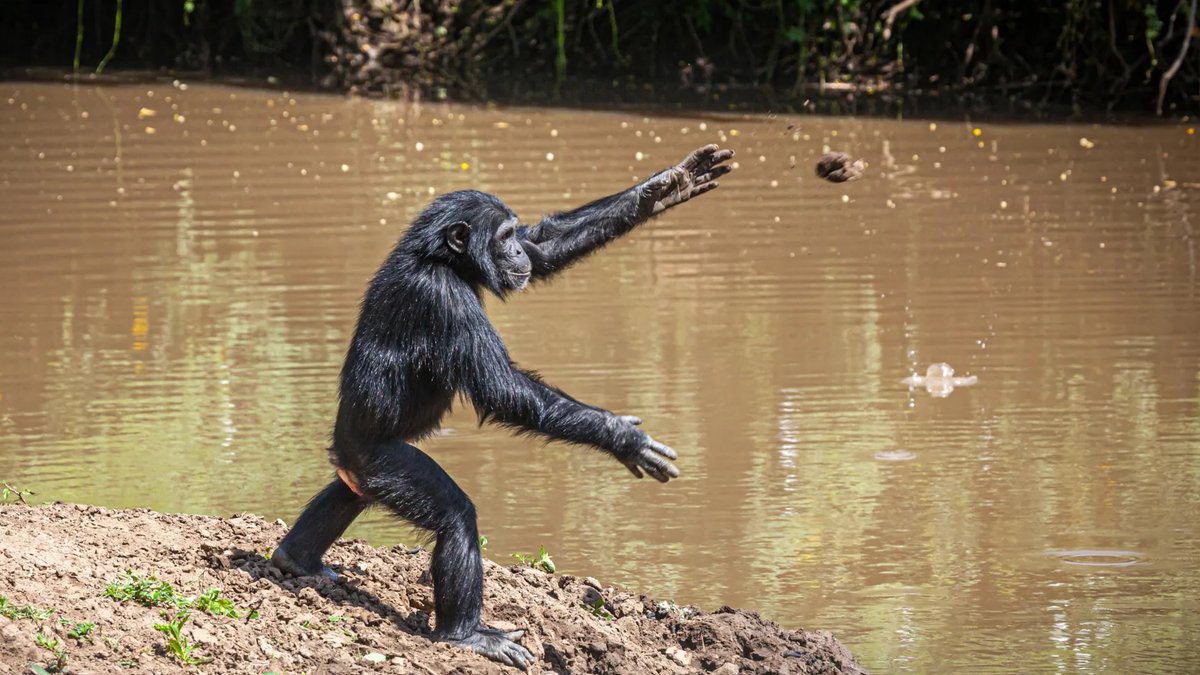
Researchers have documented wild western chimpanzees repeatedly hurling rocks at the same trees in Boé National Park, a pattern that has persisted for more than ten years.
Decade‑long use of stone‑throwing sites
Camera traps set near scarred trunks reveal that adult males return to particular trees, pile rocks at the base and launch them while emitting loud pant hoots. The same locations, first noted by a continental program in 2017, were still active when the team revisited the area, indicating a long‑term tradition.
Each tree bears a distinctive ring of shattered bark and a halo of stones, a visual record of repeated throws. The behavior is not tied to the mere presence of rocks or suitable trees; similar habitats lack such sites, suggesting a learned practice rather than an opportunistic one.
Field methods in a remote setting
The researchers established a base in the village of Béli, then trekked 22 kilometers into savanna‑woodland to set up a temporary camp. Two field assistants, Djei Baldé and Balu Séra, along with a graduate student, maintained the equipment.
Because the chimpanzees are unhabituated, observers could not follow individuals on foot. Instead, they installed two video cameras at each stone‑throwing location and positioned audio recorders to capture pant hoots and the occasional buttress drumming—hand‑ and foot‑strikes on the tree trunk.
Related: Pre-K Advantage Lasts 20 Years, Study Finds
Daily duties included swapping SD cards, recharging batteries, and scanning rocks with 3‑D equipment for later analysis. The team also logged nests, feeding signs and vocalizations encountered while moving between sites.
Understanding this pattern may shed light on how non‑human primates develop complex communication. If the throws serve a symbolic function, they could represent an early form of material culture that parallels early human stone‑tool use. Such insights help frame the broader question of how cultural traits emerge in species that share a recent common ancestor with us.
Conservation pressures and cultural loss
Industrial bauxite mining poses a growing threat to the region. Exploratory bore holes were observed near the research camp, and mining activity has already degraded habitats in neighboring Guinea.
Loss of these stone‑throwing sites would erase a rare example of durable primate culture, removing a valuable resource for future scientific study. Protecting the forest not only safeguards the animals but also preserves a living record of their social innovations.
Efforts to highlight the cultural significance of such behaviors aim to strengthen arguments for stricter environmental oversight in a country where governance remains unstable.
