Sudan’s farmers confront two overlapping disasters: an ongoing war and a deepening drought tied to El Niño, a climate phenomenon that has left fields barren and livestock emaciated. Since fighting began in 2023, isolated famine zones have already emerged. Now, the United Nations projects that drought—marked by the lowest rainfall in generations—will force millions more into hunger by 2027.
Data from the US Geological Survey shows that rainfall during Sudan’s critical growing season, from July to September, reached its lowest point in over three decades. In North Darfur, precipitation levels matched the 1984 drought, the same year a famine killed hundreds of thousands. North Kordofan experienced its driest conditions since 1990, while Gedaref in the southeast recorded its lowest rainfall since 1991. The drought strikes rain-fed agriculture, which provides the bulk of Sudan’s food, at a time when war has already crippled farming operations.
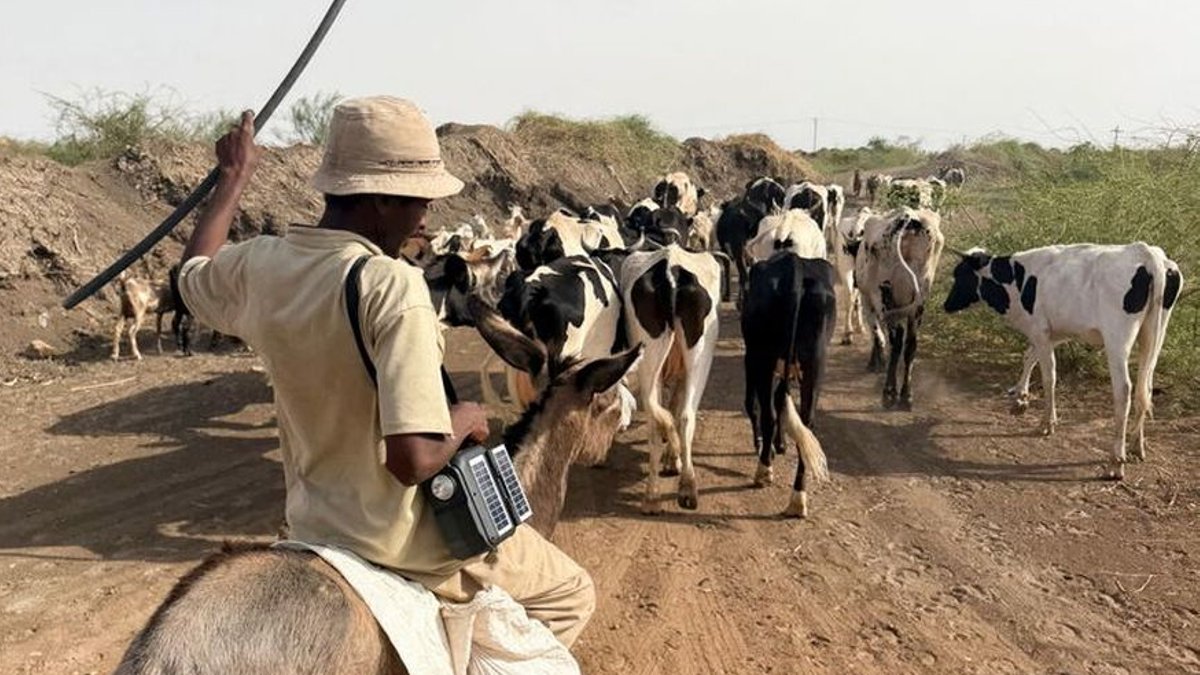
Mariam Omar, a farmer in North Kordofan, stands amid shriveling crops near Um Ruwaba. “This year is terrible,” she says on her smallholding near the town of Um Ruwaba. Mohamed Abdelrahman, who manages 420 hectares of land, estimates that 40% of fields in the region will produce nothing. In markets like El Obeid, cows now display visible ribs, a stark shift from past seasons. Sirajaldeen Abdellateef, a livestock trader, counts Sudanese pounds that have lost value amid inflation, noting, “Usually at this time the cattle are fat and everyone is making a profit. But now, with this autumn’s scarcity, the cattle became skinny.”
Read Also: Truckers end protests in southern Italy
Drought turns UN hunger warnings into crisis
UN agencies had anticipated that harvests this year might ease hunger pressures, but the drought has overturned those hopes. The Integrated Food Security Phase Classification (IPC) issued an October warning that famine risk is climbing, worsening the impact of conflict. By the end of 2026, the World Food Programme expects an additional 350,000 people to face severe hunger, with that number rising to 1.2 million more by August 2027, according to WFP Sudan head Samuel Clendon.
The regions most affected are Darfur and Kordofan, where aid workers report that hunger now drives displacement as much as violence does. In Tawila, a Darfur camp housing 700,000 displaced people, food rations have been cut in half. Suad Ahmed, a displaced teacher who fled her village, recalls, “As I was coming here on the road, so many people said: ‘If you find food and drink there, please tell us.’”
Humanitarian organizations are struggling to meet the crisis. The WFP has secured only $276 million for Sudan operations, less than half its 2025 budget, and requires an additional $134 million to address drought-driven hunger. Carl Skau, the WFP’s acting executive director, described the shortfall in aid and harvests as “a recipe for disaster” after visiting Darfur.
Read Also: Targeted Hemodynamic Therapy Increases Death Risk in Major Surgery
1984’s famine looms; this time with war
The current drought echoes the conditions that triggered Sudan’s 1984 famine, when hundreds of thousands perished. Back then, international aid arrived in time. This time, funding has been drastically reduced. Famine expert Alex De Waal states, “The situation today is in most respects much, much worse because of the conflict.” In Um Ruwaba, farmer Sirajaldin al-Tahir expresses the same fear: “This year, 2026, we don’t know how it will end.”
In Gedaref, Sudan’s southeastern breadbasket, the drought has devastated crops even in areas untouched by fighting. Emad Kabsoor, who oversees farms covering 14,700 hectares, reports his expected harvest will be just one-quarter of last year’s. October temperatures in the region rose 7 to 9 degrees above historical averages, accelerating soil moisture loss. Kabsoor notes that even if rains return, this season’s damage is permanent. “Even if we get rain going forward, I’ll only have about 25% of last year’s crop,” he says. “We’ve never had a season like this,” he adds.
