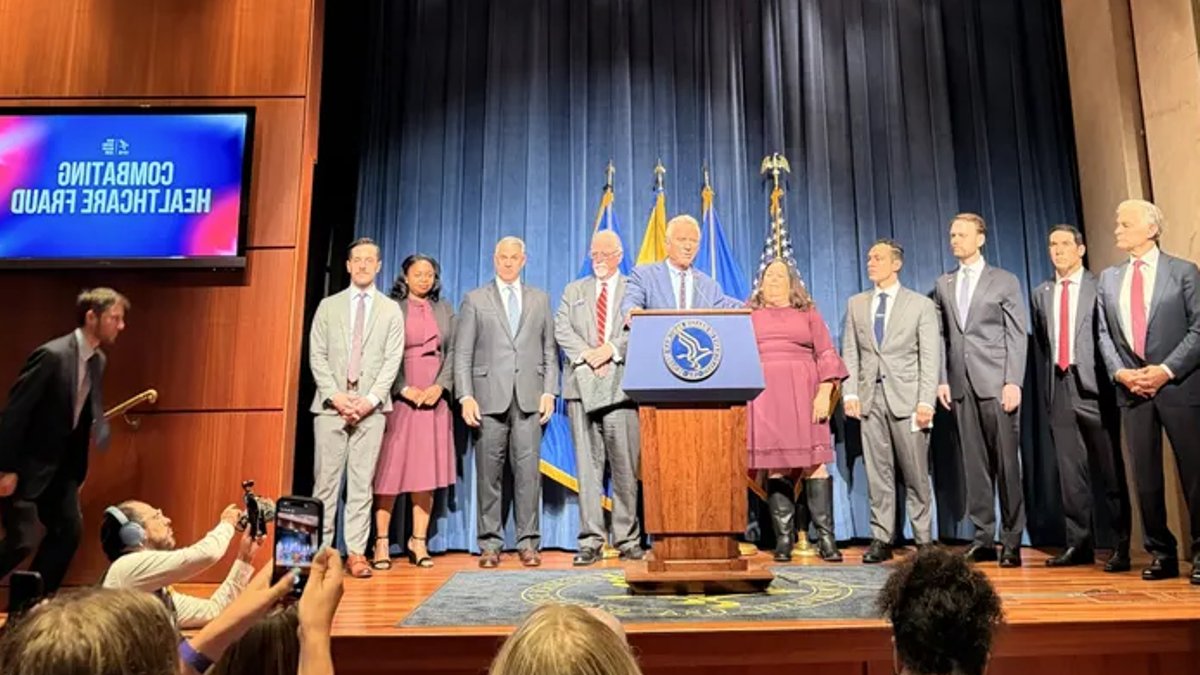
The Trump administration has paused over $1 billion in Medicaid payments to California and Minnesota, citing concerns about fraud in the states’ Medicaid programs.
Regulators halted roughly $867.5 million in funding for California and $199 million for Minnesota, after reviews found a significant number of payment claims that needed additional documentation.
The Centers for Medicare and Medicaid Services (CMS) paused $1.3 billion in Medicaid payments to California and $350 million to Minnesota earlier this year.
State regulators and lawmakers contest the Trump administration’s portrayal of widespread fraud in their Medicaid programs.
Democrats argue that the Trump administration’s actions are a smokescreen to hurt its political opponents, given only Democrat-led states have had their payments withheld.
California Gov. Gavin Newsom wrote on social media that the state is being targeted for political reasons, not because of evidence of fraud.
Medicaid directors in California and Minnesota say it’s difficult to work with the CMS, as the agency frequently shifts goalposts for compliance.
The CMS has sent letters requesting information about Medicaid program integrity to a handful of other states, including New York, Maine, and Florida.
The actions follow an executive order from President Donald Trump in March establishing a fraud-fighting task force.
The task force has worked closely with the Department of Justice and top health officials in the CMS to root out fraud, waste, and abuse.
Patient advocates and Democrat lawmakers argue that cutting funding without warning threatens services for low-income Americans in Medicaid.
Related: AdaptHealth reports patient data breach in cyberattack
The deferrals have sparked condemnation from stakeholders, who worry that the Trump administration is using a hammer instead of a scalpel in its war on fraud.
The CMS has only publicly announced funding deferrals in Minnesota and California.
However, the agency has sent letters to other states, warning them to comply with federal standards or face decertification.
The HHS has given the CMS and the HHS’ Office of the Inspector General the power to remove providers from federal healthcare programs and bar them from rejoining.
Most stakeholders applaud the spirit of the Trump administration’s war on fraud, though they worry officials are rushing to enforcement actions that could hurt states and their Medicaid beneficiaries on shaky data.
For example, the CMS sent a letter to New York in March accusing the state of running a Medicaid program riddled with fraud, but later acknowledged its mistake.
The issue of Medicaid fraud is complex – a more considered approach might be needed to tackle it – one that doesn’t put the services of low-income Americans at risk.
The Trump administration’s actions have significant implications for the states and their Medicaid beneficiaries, and it remains to be seen how the situation will unfold.
Dan Brillman, the director of the Center for Medicaid and CHIP Services and deputy administrator of the CMS, said the dollars will flow out the door as soon as states prove the payments met federal Medicaid requirements.
States must support claims with additional documentation and validate that beneficiaries were actually eligible for care and providers actually delivered it.
States must also take additional actions when problems are identified, like suspending providers or reporting bad actors to law enforcement, to ensure value based care is provided.
