Star formation in the universe has dropped to less than half its level from 4.5 billion years ago, even though the supply of neutral atomic hydrogen—the raw material for new stars—has changed only modestly.
New Measurements Link Hydrogen and Stellar Birth
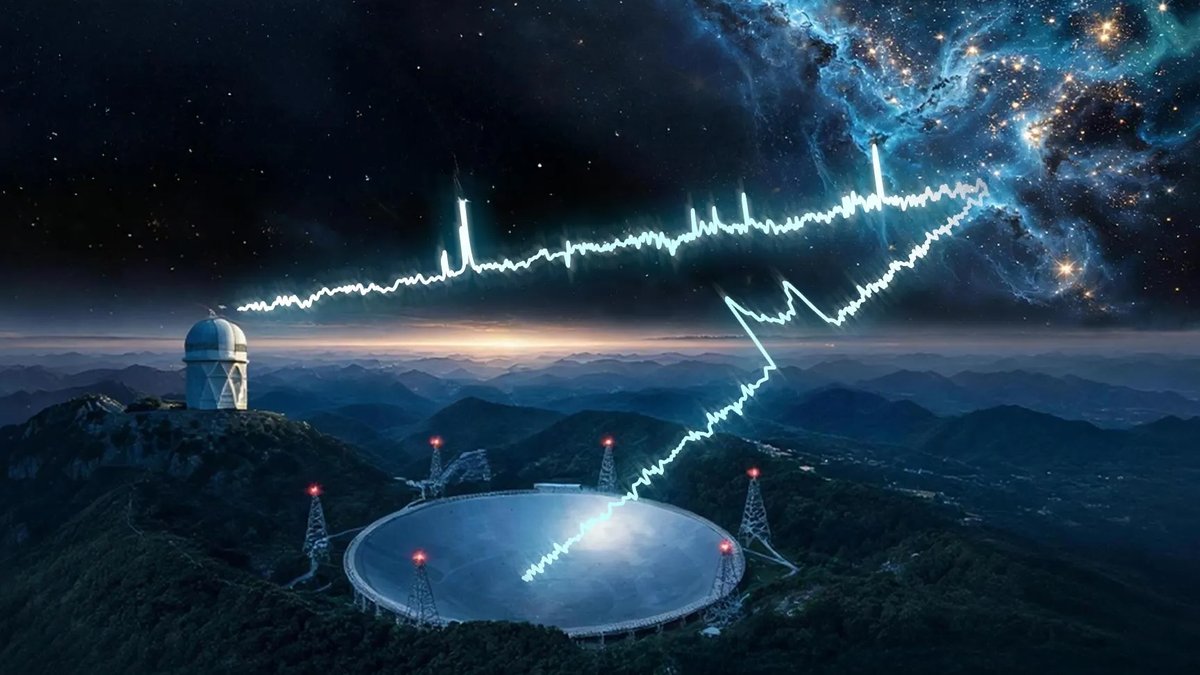
An international team led by scientists from the Chinese Academy of Sciences combined data from the Five hundred meter Aperture Spherical radio Telescope (FAST) and the Dark Energy Spectroscopic Instrument (DESI) to track hydrogen across cosmic time. Their findings, published in Nature Astronomy on Sept. 1, reveal a striking mismatch between the decline in stellar birth rates and the stability of the hydrogen reservoir.
How Researchers Peered Into the Faint Signal
Neutral atomic hydrogen, or HI, emits a very weak 21‑centimeter radio line that is easily lost in background noise. Traditional deep surveys could detect the signal but covered only tiny sky patches, while wide‑area surveys lacked the sensitivity to see it. By stacking the faint radio emissions from about 2.5 million galaxies, the team amplified the average signal enough to measure the cosmic HI density with unprecedented precision.
The stacking technique aligned each galaxy’s weak radio trace using its precisely known redshift from DESI’s optical spectra. When combined, the collective signal rose above the noise, allowing the researchers to chart how the HI reservoir evolved over the recent half of cosmic history.
Related: Scientists explain why snake embryos twist into spirals
Four and a half billion years ago, the cosmic star‑forming rate was roughly 2.5 times higher than today. In the same interval, the density of HI was only about 1.4 times greater than the present value. In other words, the drop in stellar production far outpaced the modest reduction in the hydrogen supply.
This result challenges the simple notion that galaxies simply run out of cold gas. If gas depletion were the sole driver, astronomers would expect the hydrogen reservoir to shrink in step with the falling star‑forming activity, which the data do not support.
The study therefore shifts the central question from “is the gas disappearing?” to “why does abundant HI no longer translate into new stars?”
One plausible line of thought is that the conversion of HI into the denser molecular clouds needed for star birth has become less efficient. As the flow of fresh gas from the cosmic web weakens, galaxies may retain their HI stores while struggling to assemble the molecular hydrogen that directly fuels stellar nurseries.
Related: Chimpanzees Throw Rocks at Same Trees for Decade
It’s a bit odd that the universe keeps a pantry full of ingredients yet seems to lose the appetite for cooking.
Looking ahead, further observations that map molecular gas alongside HI could clarify whether the bottleneck lies in the gas‑phase transition or in internal galactic processes that regulate cloud collapse. If the trend continues, the cosmic star‑forming engine may keep winding down even as the HI reservoir lingers.
Beyond the numbers, the collaboration—spanning institutions in Asia, North America and Europe—demonstrates the power of pairing ultra‑sensitive radio telescopes with massive optical spectroscopy surveys. The combined data set offers a new benchmark for studying the gas cycle that governs galaxy evolution in the universe’s later epochs.
