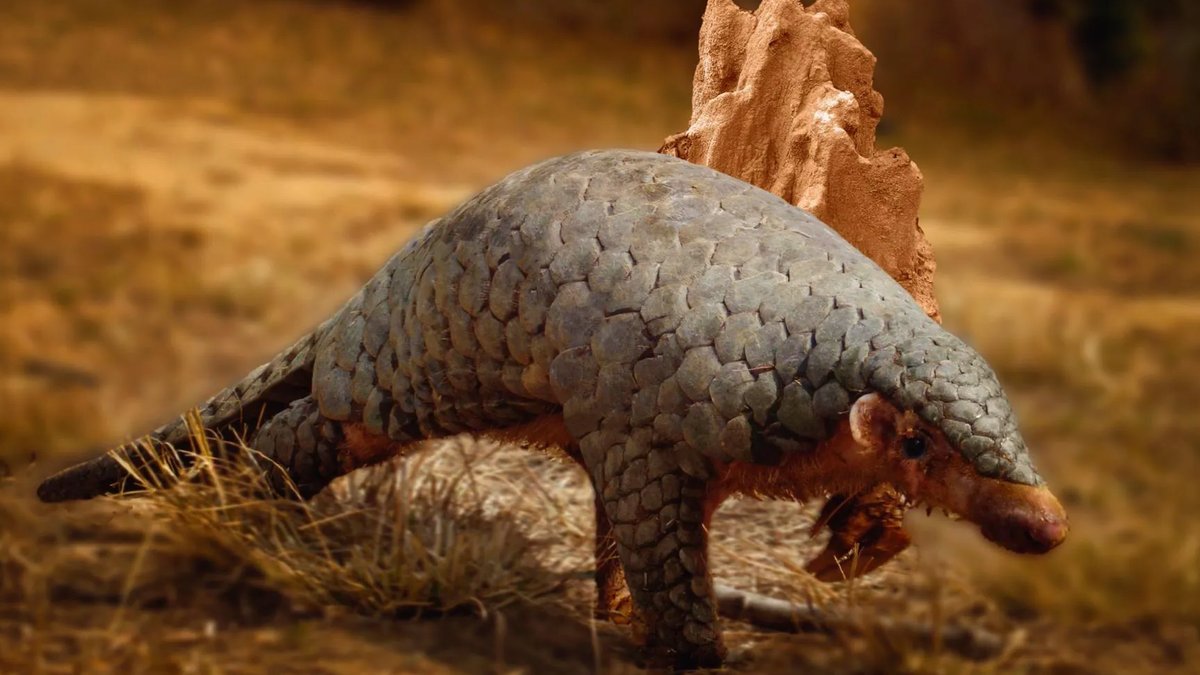
Researchers have confirmed that a previously unrecognized Asian pangolin species, Manis aurita, has been living in Nepal and Northern India. By analyzing genetic material from a museum specimen dating back to 1836, the team settled a long-standing debate regarding the classification of these mammals. The findings, published in Communications Biology, clarify how different populations relate to one another and where they reside.
Pangolins are medium-sized mammals defined by long tails, large claws, and overlapping scales. Because these animals are heavily targeted by poachers for the illegal wildlife trade, they remain at risk of extinction.
Related: Genes may drive cholesterol spike on low-carb diets
Scientists have struggled to accurately track them because different species often look nearly identical, making it difficult to identify which populations are under the most pressure.
The classification of Himalayan pangolins began shifting in 2025. At that time, a research team determined that animals previously grouped as Chinese pangolins actually represented two distinct species. One resided in China, while the other lived in the Himalayan foothills across Bhutan, Myanmar, Nepal, and India. This second group was initially named Manis …
However, scientific naming follows strict rules of priority, where the earliest documented name takes precedence. The researchers eventually turned to the Natural History Museum in London to resolve the confusion. By sequencing DNA from a specimen collected nearly two centuries ago, they confirmed that the animals identified as M. indoburmanica were actually members of M. aurita, a species first described in the 19th century.
For conservationists on the ground, this taxonomic clarity serves as more than just a formal update. By defining the precise geographic ranges of these animals, it becomes possible to tailor protection strategies to specific regions rather than relying on broad, potentially inaccurate data. If local officials can now distinguish between species based on biological markers, they can better identify which areas require immediate intervention against poaching syndicates. This historical museum archive essentially acts as a modern tool for law enforcement, as authorities can now work backward from confiscated scales to trace the exact origins of illegal shipments. Understanding how different populations relate to one another helps ensure that biological diversity is preserved across these varied environments.
Related: Urine Colors Indicate Various Health Issues
Preventing the trafficking of these animals is difficult because authorities typically encounter only loose scales in marketplaces. The DNA methods utilized in this study offer a way to analyze such evidence and determine the species of origin. This could allow scientists to pinpoint where poaching pressure is most intense.
Improved species boundaries also refine reintroduction programs, ensuring that conservationists do not accidentally release the wrong type of animal into a specific environment. The study involved a broad coalition of institutions, including the Field Museum and the Smithsonian National Museum of Natural History. The researchers noted that without access to such historical collections, gathering this level of data would have been nearly impossible given the rarity of the animals in their natural habitats today.
