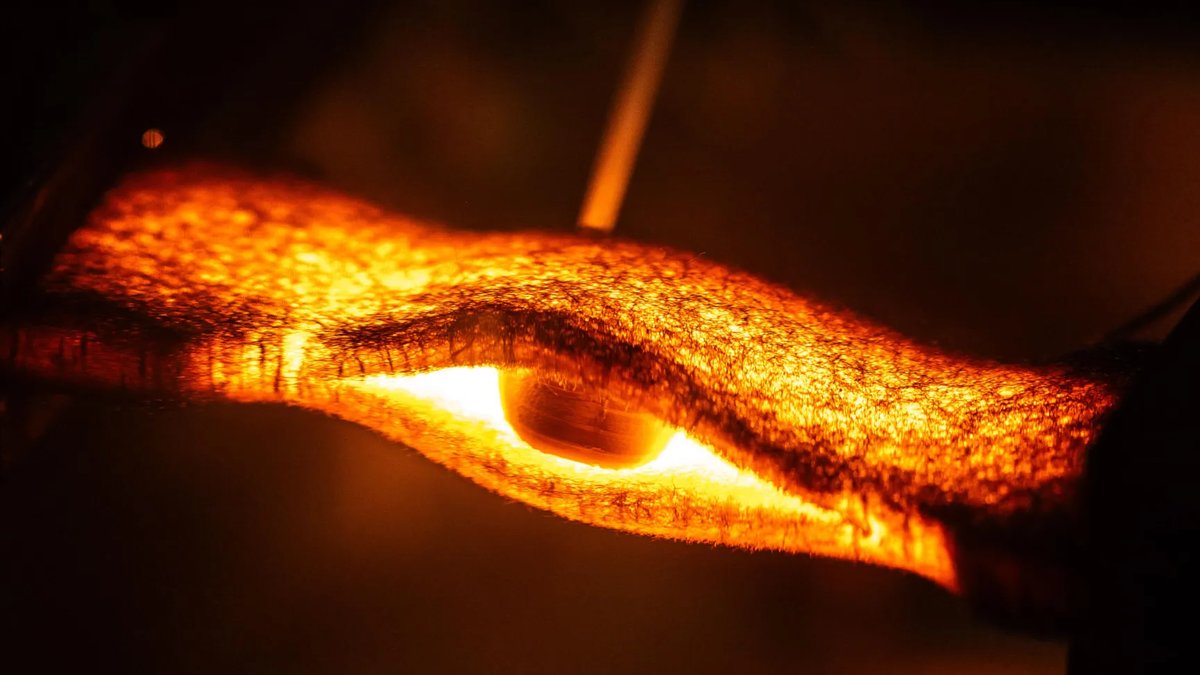
Researchers at the University of Texas at Dallas have developed a method that could let dentists 3D-print permanent zirconia crowns in a single visit, cutting a step that traditionally takes up to 100 hours down to less than 30 minutes. Zirconia is widely considered the gold-standard material for permanent dental work because of its strength and durability, but it has been difficult to print quickly without damaging the restoration.
With support from the National Science Foundation, the team is now working toward commercializing the technology for crowns, bridges, veneers and other dental restorations. The research was described in the journal Ceramics International.
Why Zirconia Is Hard to Print Fast
Dental crowns are protective caps placed over teeth that have been damaged or affected by decay. Crowns can also support a dental bridge, which replaces a missing tooth. 3D-printed restorations have become an attractive option because they can be customized precisely and matched to a patient’s tooth color, and the process can reduce costs and material waste.
Related: Exercise helps maintain weight more than losing it
Same-day crowns currently available are generally made from ceramic resins, which lack the strength of zirconia. Some practices offer same-day zirconia crowns, but those are milled from a solid block rather than printed. Milling can restrict design complexity and carries a risk of micro-cracking.
Once a zirconia crown is 3D-printed, it must go through two stages: debinding and sintering. During debinding, the crown is slowly heated to remove the resin that holds zirconia particles together. That step traditionally takes 20 to 100 hours. The crown is then sintered — fired at high temperature so the particles fuse into a dense, hardened material.
“Debinding has been the bottleneck in the process,” said Dr. Majid Minary, professor of mechanical engineering at UT Dallas and corresponding author of the article. “It must be done very slowly. If you speed it up, the polymer being burned off turns into gas, and if that gas cannot escape, the crown may crack or fracture. A debinding time of 20 to 100 hours is not practical for same-day dental service. As a result, 3D-printed permanent zirconia restorations are not yet commercially available.”
Cutting the Wait From Days to Hours
The new system combines improved heat transfer with porous graphite felt that can reach temperatures above 2,550 degrees Fahrenheit. The felt surrounds the printed restoration and gives escaping gases a way out, while a vacuum system removes them from the area. That combination is what makes the fast debinding possible, according to Minary.
Related: White Bumps on Lips: Dermatologists Explain Causes
The approach is still a long way from your dentist’s office. The method would need clinical validation and regulatory approval before it becomes commercially available, and the team is now working toward that goal.
Moving Toward Same-Day Commercial Dentistry
“We are excited to be advancing the commercialization of chair-side 3D-printed, all-ceramic zirconia permanent dental restorations,” Minary said. “Because the crowns can be custom-printed for each patient on the same day, this approach offers greater personalization, faster treatment and the convenience of receiving a permanent restoration in a single visit.”
Other contributors include Mahdi Mosadegh, first author and mechanical engineering doctoral student; Moein Khakzad; chemistry doctoral student Zahra Sepasi; graduate student Kalyan Nandigama; and Dr. Golden Kumar, associate professor of mechanical engineering. The research was also supported by the U.S. Air Force Office of Scientific Research.
