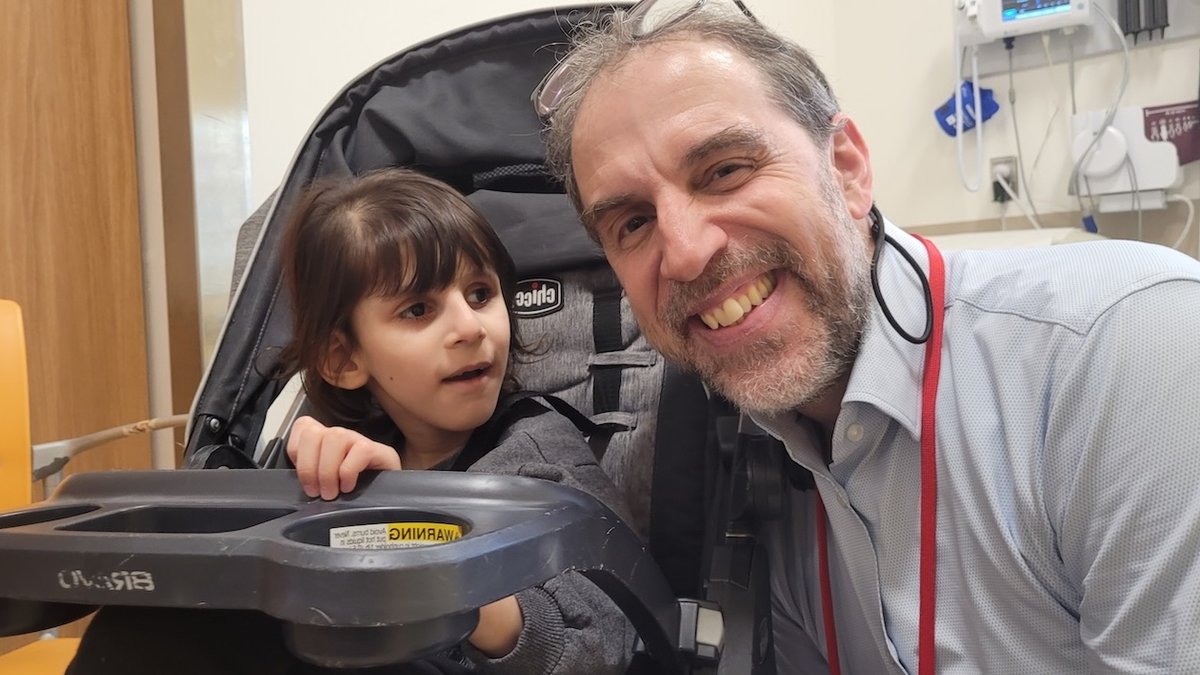
On April 21, 2026, Dr. Zachary Grinspan paced nervously on the 3rd floor of NewYork-Presbyterian/Weill Cornell Medical Center. The pediatric neurologist was preparing to oversee the first dose of an experimental gene therapy for Riaan Singh Digeorge, a 6-year-old with Cockayne syndrome.
“You need to be a little frightened when you do first-in-human therapy,” Grinspan told Inside Precision Medicine. “If you, as a physician, are not a little bit scared, you’re not doing your job.”
Building a One-Patient Clinic
Riaan’s family chose Weill Cornell for its proximity to their home in Manhasset, New York. Grinspan offered something equally important: a willingness to collaborate closely with patient advocates and move quickly. After securing regulatory approval, his team rapidly scheduled Riaan’s visits and joined planning calls.
For Grinspan, the treatment was uncharted territory. He had overseen only one other program involving adeno-associated virus serotype 9 (AAV9) and had never administered gene therapy through the cerebral ventricles—the route required for Riaan. That made the expertise around him critical, including Dr. Mark Souweidane, a pediatric neurosurgeon who would perform the operation.
Preparing Riaan required more than a neurologist and neurosurgeon. Grinspan assembled a “gene team” of roughly 10 pediatric specialists to anticipate potential complications and develop response plans. Unlike conventional medicines, a first-in-human therapy offers no established clinical playbook.
Read Also: Grafted human brain tissue thrives in cortex-depleted mice
The team had to extrapolate from related vectors, preclinical studies, and other gene therapy programs. “We met a few times before the therapy so that if anything went wrong, if any of these horrific side effects were to happen, we would be well prepared,” Grinspan said.
Much of that preparedness came from lessons learned elsewhere in the field. “We know that people have died in these gene therapy programs,” Grinspan said. “So we actually have a lot of experience in knowing what kinds of things you look for.”
The Diagnosis Gap
Riaan’s journey illustrates the problem. Cataracts and other abnormalities appeared at three months, but a cataract panel and microarray failed to provide answers. It took whole-exome sequencing to reveal Cockayne syndrome—a diagnosis that made everything else possible.
“The centers that historically have a lot of genetic counselors around do the testing,” Grinspan said. “Typically, those are paid for on research dollars or philanthropic dollars and not on clinical billing dollars.”
The challenge extends beyond physician willingness to order genetic testing. “I’m not the gatekeeper,” Grinspan said. “I, as a pediatric neurologist, am more than happy to get testing done. The problem is capacity.” Genetic testing requires counseling that Grinspan, managing a busy practice, cannot fully provide. Genetic counselors are essential but often unsupported by reimbursement structures, creating a mismatch between diagnostic capabilities and healthcare system capacity.
